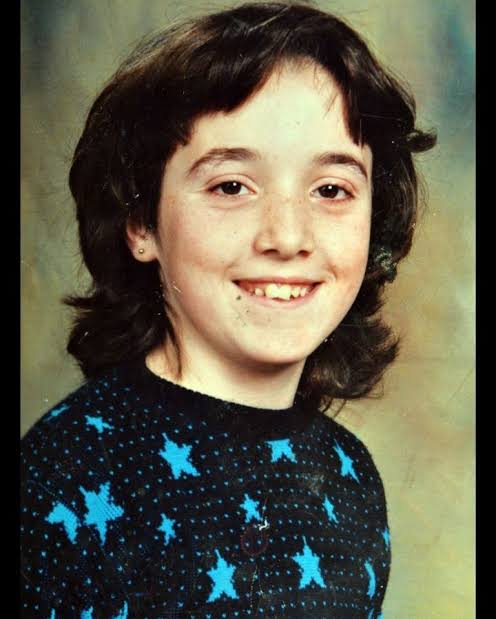
Margaret Bates says she felt it the moment she met him. A bread knife sitting on the kitchen counter, a stranger walking down the stairs in her own home, and a thought she'd never had before in her life: she wanted to pick it up and use it on him.
She didn't. Within months, that stranger had killed her daughter.
A Relationship Built on Deception
Kelly Anne Bates met James Patterson Smith in 1993, while babysitting for a mutual friend. She was 14. He was in his late 40s — more than three decades older — though for the first two years of their relationship, Kelly's parents had no idea any of this was true. Smith kept his age and identity from them deliberately, and Kelly kept the relationship itself a secret, the way grooming relationships are so often built: slowly, quietly, with the adult presenting himself as protective rather than predatory.
By the time Margaret Bates actually met him, in late 1995, the relationship was already two years deep. Her reaction was immediate and visceral. She'd later describe physically wanting to harm him, on sight, before she knew anything concrete to justify it.
She'd later say she wondered if it was some kind of premonition.
A Pattern That Predated Kelly
Smith had a documented history of violence against women long before Kelly. His first marriage ended after years of abuse against his wife. A subsequent relationship, with a woman in her early twenties, involved sustained physical violence, including while she was pregnant with his child, and at least one attempt to drown her in a bath. After that relationship ended, he moved on to a 15-year-old, whom he also abused, including another attempted drowning.
Each of these women survived him and got out. Kelly Anne Bates would not.
Isolation, Then Escalation
In November 1995, Kelly moved out of her family's home and in with Smith, who was unemployed, in the Gorton area of Manchester. Her parents were uneasy about the decision but agreed on the condition that she stay in regular contact.
She didn't, not really. Over the following months, the outgoing, athletic teenager who'd once talked about becoming a teacher grew increasingly withdrawn. When she did visit her family, they noticed bruises and bite marks, which she explained away as accidents. In March 1996, her parents received cards for an anniversary and a birthday that were supposedly from Kelly — written, it would later become clear, entirely in Smith's handwriting.
What was actually happening in that house over the following weeks was sustained, deliberate torture. We're not going to detail the specific methods here — they're extensively documented elsewhere by outlets that have chosen to lay them out in full, if that's something you're looking for. What matters for understanding the case is this: a Home Office pathologist who had examined more than 600 homicide victims over his career called Kelly's injuries the worst he had ever seen. The lead detective on the case, with fifteen years on the force, said the same.
The Call That Didn't Match the Scene
On the morning of April 16, 1996, Smith walked into a Greater Manchester police station and calmly reported that Kelly had drowned accidentally during an argument in the bathtub. He claimed he'd tried, and failed, to revive her.
What police found at his house told an entirely different story. The injuries on Kelly's body had clearly been inflicted over a period of weeks, not minutes. She had been kept in conditions of starvation and confinement, and the pathologist determined that catastrophic injuries to her eyes had occurred days to weeks before her death — meaning Kelly had spent some of her final stretch of life unable to see her own torturer.
A Trial the Jury Couldn't Forget
At trial, prosecutors laid out the scale and duration of what Kelly had endured. A psychiatrist who evaluated Smith described him as living in "a distorted reality," driven by a severe paranoid disorder rooted in jealousy. Other women he'd previously abused came forward to testify, painting a consistent picture across decades.
Smith's defense was to cast himself as the victim. He claimed Kelly had provoked him — taunting him, he said, about his dead mother — and even suggested some of her injuries were self-inflicted, intended to make him look bad. The jury took one hour to reject all of it and convict him of murder.
The case was disturbing enough that every member of the jury was offered, and accepted, professional counseling afterward — a detail that says as much about the severity of the evidence as anything in the verdict itself.
Smith was sentenced to life in prison, with the judge recommending a minimum term of 20 years before any possibility of parole (some later accounts cite 25 years; reporting on the exact minimum term has varied). Sentencing him, the judge didn't mince words: "You are an abuser of women, and I intend, so far as it is in my power, that you will abuse no more."
What's Left
Margaret Bates has said she still thinks about that moment in her kitchen — the bread knife, the impulse she didn't act on. It's a strange thing to carry, the idea that some instinct in her recognized danger before there was any evidence to point to. There wasn't anything she could have done differently with the information she had at the time. That doesn't make the memory any easier.
If this story raises concerns for you about a relationship in your own life or someone else's, organizations like Women's Aid and the National Domestic Violence Hotline offer confidential support and guidance.
Sources
Murder of Kelly Anne Bates — Wikipedia https://en.wikipedia.org/wiki/Murder_of_Kelly_Anne_Bates
Inside Kelly Anne Bates' Brutal Murder By James Patterson Smith — All That's Interesting https://allthatsinteresting.com/kelly-anne-bates
The horrific murder of Kelly Anne Bates — Crime+Investigation UK https://www.crimeandinvestigation.co.uk/articles/horrific-murder-kelly-anne-bates
The Murder of Kelly Anne Bates — Morbidology https://morbidology.com/the-murder-of-kelly-anne-bates/