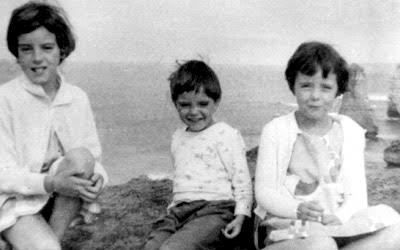
Three siblings walked to the beach on Australia Day. None of them came home for lunch, and none of them have ever been found.
Jane, Arnna, and Grant Beaumont — 9, 7, and 4 years old — disappeared from Glenelg Beach near Adelaide, South Australia, on January 26, 1966. Nearly 60 years later, theirs remains one of Australia's most extensively investigated unsolved cases.
A Short Bus Ride
The children boarded a local bus that morning for the short trip to the beach, something they'd done alone the day before without incident. Their mother, Nancy, told them to be home by 2 p.m. When they hadn't returned by evening, she and her husband Jim went to police.
A Man on the Beach
Multiple witnesses reported seeing the three children that morning playing comfortably with a tall, fair-haired man in his mid-thirties near Glenelg's Colley Reserve — a detail that struck their parents as strange, since Jane in particular was known to be shy around strangers. Arnna had mentioned to her mother that Jane had "got a boyfriend down the beach," which Nancy took to mean an ordinary playmate. A shopkeeper who knew the children well later said Jane bought food that day with a £1 note — far more money than the children had been given for the trip, and an unusual purchase for kids who'd never bought a meat pie before. Investigators came to believe the children had met the man, and trusted him, before that day.
A Massive, Fruitless Search
Sixty officers went door-to-door across more than 400 homes. A boat harbor near the beach was drained on the theory the children might have drowned there; nothing turned up. Police released a composite sketch of the man seen with the children, published nationwide. None of it led anywhere. The case became one of the largest police investigations in Australian history, and it stayed that way for decades.
Suspects Who Were Never Charged
Over the years, investigators looked seriously at several men, none of whom were ever charged in connection with the Beaumont case specifically. Bevan Spencer von Einem, convicted in 1984 of murdering a teenager in an unrelated case, drew suspicion partly because his appearance resembled the composite sketch; he died in 2025 without ever cooperating with investigators on the Beaumont question. More recently, attention has focused on the late Harry Phipps, a wealthy local businessman who lived close to the beach and reportedly resembled the man seen with the children. Two men who were teenagers in 1966 later told police Phipps had paid them to dig a large hole at his factory the weekend after the disappearance, and Phipps's own son told police in 2013 that he recalled seeing the children in his family's backyard that day. None of this has ever amounted to a formal charge, and Phipps died decades ago, in 2004, without ever being charged.
Three Digs, No Answers
Police excavated the site of Phipps's former factory in 2013 and again in 2018, after ground-penetrating equipment detected soil anomalies; both digs found nothing connected to the case. In February 2025, a third, privately funded excavation of the same property, organized after new information reached investigators, also came up empty after a week of searching.
A Case Still Open, A Family Now Gone
Nancy Beaumont died in 2019; her husband, Jim, died in 2023 — neither ever learned what happened to their children. South Australia Police have said publicly the case has never been closed and never will be until it's resolved.
Frequently Asked Questions
Have the Beaumont children's remains ever been found?
No. Despite decades of investigation and multiple excavations, none of the three have ever been located.
Was Harry Phipps ever charged?
No. He was never formally charged in connection with the case and died in 2004.
Did the 2025 excavation find anything?
No. The week-long dig at a former factory site in February 2025 found no remains or evidence connected to the case.