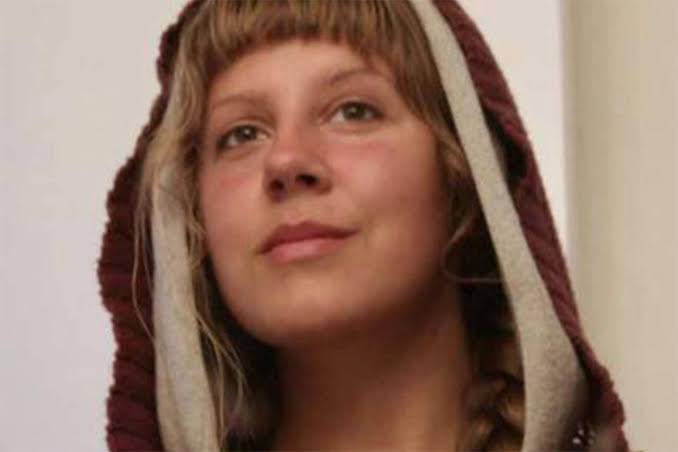
Police talked to her for forty-five minutes. They decided she was safe. Three hours later, her own mother arrived in the city to bring her home, and Emma was already gone.
A Fresh Start That Didn't Last
Emma Fillipoff moved to Victoria, British Columbia, in the fall of 2011, leaving her hometown of Perth, Ontario, for a new chapter. She found seasonal work as a chef at the Red Fish Blue Fish restaurant in Victoria's Inner Harbour and, by most accounts, settled into the city. Friends and her sister described her as warm, creative, and a little goofy — someone who took after her father's artistic streak and wrote prolifically.
When her seasonal job ended on October 31, 2012, she told coworkers she'd be back in the spring. She never made it that far.
Unraveling, Quietly
In the weeks before she disappeared, Emma's behavior changed in ways that worried the people around her, even if no one fully understood why at the time. Unbeknownst to her family back in Ontario, she had been staying on and off at the Sandy Merriman House, a women's shelter, since February. Shelter staff later told Emma's mother she had required both physical and medical intervention at points during her stay.
Emma's own journals and writing from this period described a persistent feeling of being watched or followed, though investigators and forensic experts who later reviewed the material said it didn't read like the warning signs typically associated with suicide. On November 21, she arranged to have her car towed from Sooke into a downtown parking garage — a move police believe was part of preparing to head back to Ontario. Two days later, security footage at the Victoria YMCA showed her entering and leaving the building repeatedly in a short span, as though checking to see if someone outside was watching for her.
She called her mother, Shelley, more than once in those final days, asking if she could come home. Each time, after being told yes without hesitation, her tone would shift and she'd ask her mother not to come after all. On the last call, Shelley learned for the first time that Emma had been staying in a shelter — and decided to fly out immediately regardless of what Emma had asked. Emma's final words to her were: "I don't know how I can face you."
The Last Day
On the morning of November 28, 2012, security footage captured Emma at a 7-Eleven on Government Street buying a prepaid cell phone, hesitating at the door as if checking the street before leaving, then going back inside to buy a $200 prepaid credit card as well. She left the Sandy Merriman House around 6 p.m. that evening, hailed a taxi, and asked to be taken to Victoria International Airport — but got out partway, apparently short on cash despite having the prepaid card in hand.
Minutes later, she was spotted walking barefoot near the Empress Hotel. A man who'd met her once before, Dennis Quay, found her in visible distress, sat with her for close to an hour trying to help, and called 911 when he had to leave, worried about her state.
Police arrived and spoke with Emma at length — by most accounts, around forty-five minutes. They assessed that she wasn't a danger to herself or anyone else and let her go on her way. No one has confirmed seeing her since roughly 8 p.m. that night.
Shelley landed in Victoria around 11 p.m., three hours after that final police contact, and went straight to the shelter. Emma had never returned to claim her bed. By midnight, she was officially reported missing.
A Search With Almost Nothing to Hold Onto
Emma's red 1993 Mazda was found in the Chateau Victoria parking garage, packed with nearly all of her belongings — her passport, laptop, camera, library books, clothing — everything except what she'd had on her that final night. The prepaid cell phone she'd bought hours earlier had never been activated. The prepaid credit card eventually turned up on a roadside well north of where she'd last been seen, used once by a stranger who found it to buy cigarettes — a purchase police were able to trace, though it led nowhere connected to Emma's actual disappearance.
Investigators pursued more than 200 leads in the following years. Search teams, including Emma's own family and volunteers, combed Victoria, the surrounding islands, and eventually areas across the BC mainland, Canada, and the U.S. whenever a possible sighting came in. None were ever confirmed. A police dive team searched Victoria's inner harbour and recovered nothing.
A Strange Lead From Vancouver
In May 2014 — a year and a half after Emma vanished — security footage at a clothing store in Vancouver's Gastown neighborhood captured a man in a green T-shirt, agitated, tearing down one of Emma's missing-person posters. According to the store owners, who immediately called police, he said something to the effect of: "It's one of those missing person posters, except she's not missing, she's my girlfriend and she ran away 'cause she hates her parents."
He left before police arrived and has never been identified, despite the store's security footage capturing his image. He's since become known in the case simply as "Green Shirt Guy" — described as roughly six feet tall, with a noticeable limp and his left knee turned inward, and a prominent scar along his hairline.
Thirteen Years, and Still Looking
Emma's case has never closed, and it's never gone quiet for long. The Victoria Police Department's Major Crimes Unit has continued marking each anniversary publicly, reaffirming the file remains open and actively followed up whenever new tips come in. In 2022, on the ten-year mark, police released an age-progressed forensic sketch of what Emma might look like today. More recently, investigators worked with a forensic artist to build an age-progressed composite of "Green Shirt Guy" himself, hoping fresh attention on decade-old footage might finally produce the one tip that breaks the case open.
Emma's mother, Shelley, has spent the years since channeling her grief into sustained, public advocacy — search initiatives, media appearances, and continued public appeals. As she put it ahead of the 13th anniversary of Emma's disappearance in November 2025: "As time wore on, keeping that hope alive became more difficult." She's said she draws strength from her three other children, and that she's never fully let go of the hope that Emma will be found.
A six-part documentary series, Barefoot in the Night: The Search for Emma Fillipoff, produced by Bayberry Films, is set to premiere on January 6, 2026 — Emma's 40th birthday — aiming to bring renewed public attention to a case that, after more than a decade, still doesn't have an answer.
If you have any information about Emma Fillipoff's disappearance, or the identity of "Green Shirt Guy," you're encouraged to contact the Victoria Police Department at 250-995-7654 or submit a tip anonymously through Greater Victoria Crime Stoppers.
Sources
Disappearance of Emma Fillipoff — Wikipedia https://en.wikipedia.org/wiki/Disappearance_of_Emma_Fillipoff
13 years missing: Woman's disappearance continues to puzzle Victoria police — Victoria News https://vicnews.com/2025/11/30/13-years-missing-womans-disappearance-continues-to-puzzle-victoria-police/
Victoria investigators look to rekindle 12-year-old missing person case — Sooke News Mirror https://www.sookenewsmirror.com/local-news/victoria-investigators-look-to-rekindle-12-year-old-missing-person-case-7644738
Search continues for Emma Fillipoff 12 years after she went missing from Victoria — CHEK News https://cheknews.ca/search-continues-for-emma-fillipoff-12-years-after-she-went-missing-from-victoria-1226491/
Help Find Emma Fillipoff https://helpfindemmafillipoff.ca/