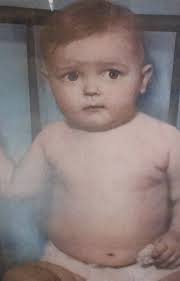
She offered to buy the older boys ice cream. Then she offered to watch the baby. When they came back, both were gone.
On September 5, 1936, 19-month-old Harry "Buddy" Browe vanished from Clark Park in Detroit, Michigan, while his two older brothers were briefly distracted by a stranger's generosity. Nearly ninety years later, his family still doesn't know what happened to him.
An Afternoon at the Park
Around 4:30 p.m., nine-year-old Charles and seven-year-old Edward Browe left their home at 1468 17th Street, pushing baby Harry in his stroller, and walked roughly fourteen blocks to Clark Park. Around 6:30 p.m., a woman arrived at the park with two young girls. She began paying close attention to Harry, chatted briefly with the boys, then offered to buy Charles and Edward ice cream — and to watch the baby while they went.
While the boys were at a nearby candy shop, the woman gave Charles more money and asked Edward to watch him cross the street safely. Edward stayed by the shop door; while there, a man approached him and handed him a few pennies for more candy. When the brothers returned to the swings where they'd left Harry, both he and the woman were gone.
The Search Begins
The boys searched the playground before making the long walk home, arriving roughly three hours later to tell their parents, Robert and Alice Browe, what had happened. Police were called immediately.
Charles and Edward, along with two other children who'd been playing nearby and a separate adult witness, gave consistent descriptions: a woman in her 30s with blonde hair and glasses, wearing a blue and white dress; two young girls with her; and a man with a cleft palate in a gray hat who had given Edward the pennies. Another witness reported seeing a man carrying a baby matching Harry's description shortly after he vanished.
Police, volunteers, and local Boy Scouts searched the area, and roughly ten thousand flyers were distributed across multiple states offering a $650 reward. The flyers described Harry's distinguishing features in detail, including surgical scars behind both ears from a mastoidectomy he'd had three months earlier, and a missing fingernail on his left ring finger.
Hundreds of Tips, No Answers
Reported sightings poured in from as far away as Indiana and Canada, including one man who was confident he'd seen Harry with a couple at a gas station in Goshen, Indiana. Investigators even traveled to Toronto to check on babies connected to the unrelated "Great Stork Derby" fertility contest running there at the time. Every lead was eventually dismissed as either a prank or a dead end.
Alice traveled to New York to make a nationwide radio appeal for her son's return. Robert publicly asked whoever had taken Harry to leave him with a clergyman rather than risk being scared off by public attention. The family also consulted a psychic, hoping for any lead that might help.
A Postcard, Never Traced
On September 11, six days after Harry disappeared, Alice received an anonymous postcard, apparently written by a woman, reading in part: “Please forgive me for taking your baby. You cannot understand how it is to be without one. You have so many, surely you can spare this one. He is beginning to like us, we want you to know...”
Investigators considered the postcard potentially genuine — this kind of contact was sometimes used by people who had taken a child to confirm identity, particularly in cases involving a ransom demand, though no ransom was ever requested here. They were never able to trace who had sent it.
More Loss for the Family
The Browe family's hardship didn't end with Harry's disappearance. In 1950, Robert and Alice were struck by a car while walking; Alice died instantly, and Robert suffered serious injuries that left him unable to continue working. In 1952, their son Charles — one of the two brothers who'd been at the park the day Harry vanished — died in a car collision. That same December, a fire damaged part of the family home.
A Possible Lead, Decades Later
In 1962, a young man contacted Detroit reporter Neal Shine, who had grown up alongside Charles and Edward and had written about the case over the years. The man said he'd read about Harry's disappearance and noticed unsettling similarities to his own life — his age, blue eyes, and matching scars behind his ears. He said the woman he'd believed was his mother had told him on her deathbed, “You are some other woman's baby. I took you. I have never been sorry, except for breaking that woman's heart.”
The man ultimately decided not to pursue the question further in his own life. Shine, believing the man worked in a hotel kitchen based on their conversations, spent six months searching hotel kitchens across the area looking for someone matching the description. He never found him.
Where Things Stand Now
Robert Browe died in 1964. Most of Harry's siblings have since passed away as well, though family members have continued searching for answers. If he's alive today, Harry Browe would be approaching 90 years old.
Frequently Asked Questions
Was anyone ever charged in Harry Browe's disappearance?
No. Despite hundreds of tips and an extensive contemporary investigation, no suspect was ever identified or charged.
Was the 1962 lead about a man believing he might be Harry ever confirmed?
No. The man chose not to pursue it further, and the reporter investigating the case was never able to locate him again.
Is Harry Browe's case still open?
It remains formally unsolved, though as a nearly 90-year-old case with no surviving direct witnesses, active investigation has long since ended.