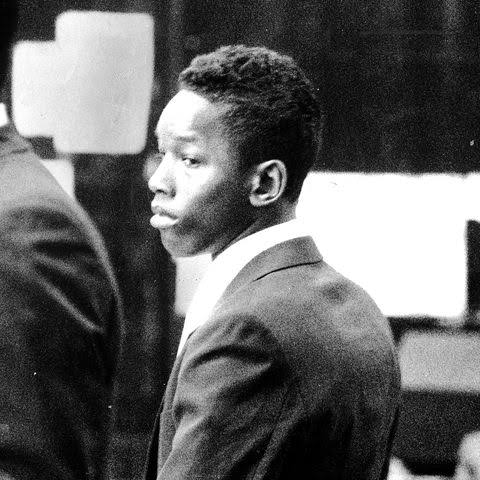
He went to the police station to support a friend. He left, more than a decade later, having served time for a crime he didn't commit.
On the night of April 19, 1989, a 28-year-old woman was brutally attacked while jogging in New York's Central Park, leaving her in a coma with severe injuries. In the days that followed, five teenagers — Kevin Richardson, Antron McCray, Raymond Santana, Yusef Salaam, and Korey Wise — were arrested and would spend years in prison for a crime none of them committed.
An Unusual Path to Interrogation
Korey Wise, then 16 (commonly reported as around 17 at the time of the case), wasn't initially a suspect. He accompanied his friend Yusef Salaam, who was 15, to the police station simply to support him. Because Korey was slightly older, he could legally be questioned by detectives without a parent present — a detail that placed him at the center of a case he had little direct connection to. Korey also had hearing and learning disabilities that made it especially difficult for him to withstand hours of aggressive interrogation.
Confessions That Didn't Match
All five teenagers gave confessions during questioning, but those statements differed from one another on key details — timing, location, and who did what. At trial, prosecutors also presented forensic evidence, including hair samples described by an analyst as "similar" to one of the boys' hair "to a reasonable degree of scientific certainty" — testimony that later drew criticism, since hair comparison of this kind lacks the scientific reliability that phrase implies.
Convictions
The five were tried in two separate cases and convicted. As the oldest, Korey Wise was tried as an adult and convicted of sexual abuse and assault, sentenced to five to fifteen years — a term he would serve almost in full, spending nearly 11 and a half years in prison, including time in adult facilities most of the others never experienced.
The case drew enormous public attention and inflamed racial tensions in New York City at the time. Real estate developer Donald Trump took out full-page newspaper advertisements calling for the death penalty to be reinstated in response to the case; he never issued an apology after the five were later exonerated.
A Confession, and DNA
In 2002, Matias Reyes, a convicted murderer and rapist already serving a life sentence for other crimes, confessed to committing the Central Park attack alone. Reyes had committed a similar rape near the park the year before under nearly identical circumstances, but investigators at the time never connected the two cases. DNA testing — far more advanced by 2002 than it had been in 1989 — matched genetic material from the original crime scene to Reyes, not to any of the five convicted teenagers. The hair evidence used at trial was also later matched to Reyes.
Exoneration
On December 19, 2002, on the recommendation of the Manhattan District Attorney, the convictions of all five men were vacated. By then, Korey Wise had already served nearly his entire original sentence for a crime he had no part in.
In 2014, New York City agreed to pay the five men a combined $41 million to settle a lawsuit over their wrongful convictions — one of the largest settlements of its kind in the city's history. The men, now widely referred to as the "Exonerated Five" rather than the earlier "Central Park Five," have said they prefer that name as a more accurate reflection of what actually happened to them.
Life After
Korey Wise has continued to speak publicly about his experience and used his platform to support criminal justice reform. In 2015, he donated $190,000 to the University of Colorado Law School's Innocence Project, which was renamed the Korey Wise Innocence Project in recognition of his contribution.
In 2019, Netflix released "When They See Us," a four-part dramatization of the case created by Ava DuVernay. Actor Jharrel Jerome won the Primetime Emmy for Outstanding Lead Actor in a Limited Series for his portrayal of Korey Wise. That same year, Wise purchased a condominium overlooking Central Park — he's the only one of the five who chose to remain living in New York City after his release. During the COVID-19 pandemic, he also volunteered to help provide food to elderly residents in Harlem.
Frequently Asked Questions
Why is Korey Wise's case different from the other four men's?
He was tried as an adult due to his age, served significantly more time than the others (nearly 11.5 years), and was the only one who spent time in adult prison facilities.
Who actually committed the Central Park attack?
Matias Reyes, a convicted murderer and rapist, confessed in 2002 and was matched to the crime through DNA evidence.
Did the five men receive compensation?
Yes. In 2014, New York City paid them a combined $41 million to settle a wrongful conviction lawsuit.
What do the men prefer to be called?
The "Exonerated Five," a term they've said better reflects the fact that they were proven innocent, rather than the earlier "Central Park Five."