Two cases. Two girls. Two crimes so unusual that investigators initially refused to believe what the evidence was telling them.
Brenda Spencer: "I Don't Like Mondays"
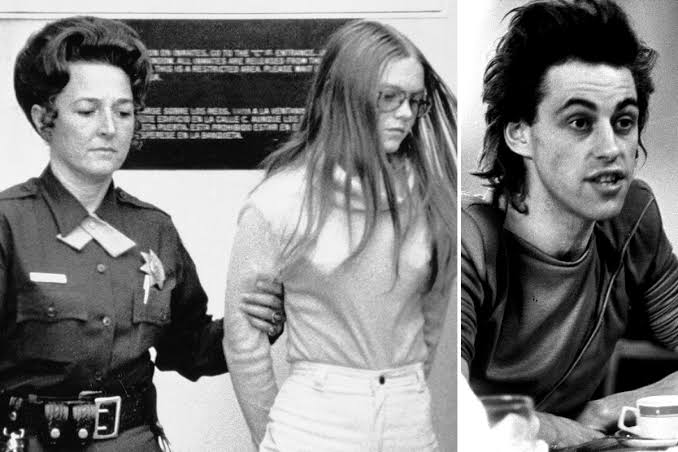
On January 29, 1979, 16-year-old Brenda Spencer opened fire from her home directly across the street from Cleveland Elementary School in San Diego, California, killing the school's principal and custodian and wounding eight children and a police officer.
Spencer had grown up in a troubled household with an alcoholic father who rarely paid attention to her. Neighbors later recalled that she had spoken openly about wanting to do something to get on television. That Christmas, her father gave her a semi-automatic rifle and 500 rounds of ammunition.
For the better part of an hour that January morning, Spencer fired from her bedroom window at children and staff arriving at school. When police finally established phone contact with her, a reporter asked why she was doing it. Her answer — "I don't like Mondays, this livens up the day" — became one of the most chilling quotes in American crime history, and the direct inspiration for The Boomtown Rats' 1979 song of the same name.
Spencer was tried as an adult and pleaded guilty to two counts of murder and assault with a deadly weapon. She was sentenced to 25 years to life in prison. She has appeared before the parole board multiple times over the decades and been denied each time, most recently in 2022. She remains incarcerated at the California Institution for Women.
She has since offered a different explanation for the shooting — claiming her father abused her and that she had been under the influence of alcohol and PCP that morning. The claims haven't been independently verified, and the parole board has consistently found her unsuitable for release.
Sharon Carr: "Killing Is My Business"
On the night of June 7, 1992, 18-year-old trainee hairdresser Katie Rackliff left a nightclub in Camberley, Surrey, and began walking home. She accepted what she thought was a safe ride. She was found dead the following morning, stabbed 32 times. Her injuries were so severe that police initially assumed the attacker was an adult man.
The real killer was 12-year-old Sharon Carr.
The case went unsolved for two years. In 1994, Carr stabbed a classmate at school and was imprisoned for it. Police who searched her belongings found diaries containing graphic, sexually explicit descriptions of Katie's murder — including details that had never been made public, details only the killer could have known. Carr had written: "I am a killer. Killing is my business — and business is good." Another entry read: "I was born to be a murderer. Killing for me is a mass turn-on."
She confessed and helped investigators film a reconstruction of the crime, laughing through parts of it.
In 1997, Carr was convicted of murder at Winchester Crown Court — at 15, one of the youngest people ever convicted of murder in the United Kingdom. She was sentenced to life with a minimum tariff of 14 years.
She has now spent more than three decades incarcerated. Now in her mid-forties, Sharon Carr remains at Surrey's HMP Bronzefield and is still considered too dangerous to be released. She has repeatedly attacked staff and fellow inmates, been placed in solitary confinement multiple times, and has continued to be denied parole. A restricted status prisoner, she has continued regularly to attack and attempt to kill staff members and fellow inmates and has regularly expressed her desire to kill others.
Katie Rackliff's family has never been able to fully move past what happened. The case continues to be cited in British discussions about juvenile sentencing, criminal responsibility, and what, if anything, can be done with children who show no capacity for remorse.
Sources
Sharon Carr: still considered too dangerous to release — Surrey Live