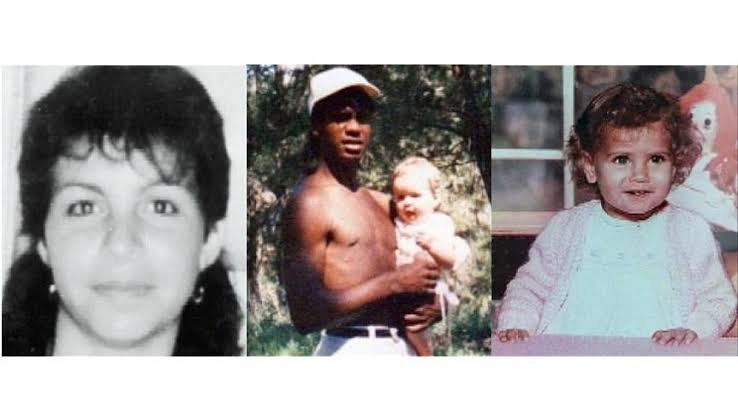
Three children went missing after parties in the same small Aboriginal community. Police told each family the same thing: they'd probably "gone walkabout."
Between September 1990 and February 1991, three Aboriginal children and teenagers disappeared after parties in Bowraville, New South Wales, Australia: 16-year-old Colleen Walker, 4-year-old Evelyn Greenup, and 16-year-old Clinton Speedy-Duroux. All three were later found murdered or presumed dead. More than three decades later, no one has ever been convicted.
Three Disappearances
Colleen Walker was last seen on September 13, 1990, walking away from a party in the Aboriginal community known as "The Mission." Police initially dismissed her family's concerns, suggesting she'd simply "gone walkabout," and no formal search was launched. Her body has never been found, though clothing weighed down with rocks was later recovered from the Nambucca River.
Evelyn Greenup, Colleen's 4-year-old cousin, disappeared from her grandmother's home on October 4, 1990, after being put to bed following another party. Her family received the same dismissive response from police. Her remains were found in bushland months later.
Clinton Speedy-Duroux disappeared on January 31, 1991, after yet another party at The Mission. His family conducted their own search after police again failed to act with urgency. His body was found in bushland weeks later, not far from where Evelyn would later be found.
A Prime Suspect
Investigators eventually focused on Thomas Jay Hart, a local white labourer in his mid-20s who was well known at The Mission's parties and had been present, or nearby, before each disappearance. Hart had reportedly made unwanted sexual advances toward Colleen weeks before she vanished, and witnesses placed him near the homes or gatherings connected to all three victims. He was arrested and charged with Clinton's murder in April 1991, and with Evelyn's murder later that year while out on bail.
Separate Trials, Two Acquittals
Due to legal restrictions at the time on using "similar fact" evidence across linked cases, the court ordered Hart's trials for Clinton's and Evelyn's murders to be held separately rather than together — meaning the jury in each trial never heard the full pattern connecting all three deaths. Hart was acquitted of Clinton's murder in 1994. Following a 2004 inquest, he was tried again for Evelyn's murder in 2006 and was acquitted a second time. No trial has ever been held for Colleen's presumed murder, since her body has never been recovered.
Changing the Law
Following the 2006 acquittal, the victims' families launched a sustained public campaign — including marches, petitions, and a protest camp outside the New South Wales Parliament — to change the state's double jeopardy laws, which at the time prevented an acquitted person from ever being retried for the same crime. In 2006, New South Wales amended its laws to allow a retrial for life-sentence offenses where "fresh and compelling" new evidence emerged.
A Retrial Bid, and a Final Rejection
In 2016, police delivered an extensive new brief of evidence to the New South Wales Attorney-General, who referred an application for Hart's retrial to the Court of Criminal Appeal. In September 2018, that court ruled Hart could not be retried. The New South Wales Attorney-General sought to appeal that decision to the High Court of Australia, which in March 2019 refused the application, concluding the new evidence did not meet the legal threshold of being "fresh and compelling."
Where Things Stand Now
Jay Hart has since changed his name and left Bowraville. A reward of up to $1,000,000 remains on offer for information leading to a conviction in the case. The case has been the subject of extensive academic study around Indigenous justice and double jeopardy reform, and was examined in depth in journalist Dan Box's acclaimed podcast, "Bowraville." The families of all three victims have continued publicly advocating for the case, describing the lack of resolution as an enduring source of grief and intergenerational trauma in the Bowraville Aboriginal community.
Frequently Asked Questions
Has anyone ever been convicted of the Bowraville murders?
No. The prime suspect, Jay Hart, was acquitted twice — once for each of the two victims whose murders went to trial — and no trial has ever occurred for the third victim, whose body was never found.
Why couldn't Jay Hart be retried after the double jeopardy law changed?
In 2019, the High Court of Australia ruled that the new evidence police had gathered didn't meet the legal standard of being "fresh and compelling," which is required under the reformed law.
Is there still a reward for information?
Yes, up to $1,000,000 for information leading to a conviction.
Is there a documentary or podcast about this case?
Yes. Journalist Dan Box's podcast "Bowraville" examines the case in extensive detail.