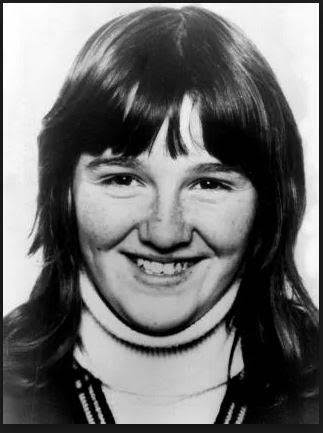
She only meant to be gone a few minutes. She never came back.
On the evening of March 20, 1978, 12-year-old Denise McGregor was abducted while running a short errand near her home in Pascoe Vale, a suburb of Melbourne, Australia. Her murder remains one of the city's most infamous unsolved cases, nearly five decades later.
An Ordinary Errand
Denise lived on Bell Street with her mother and siblings. Around 6:15 p.m., she and her 11-year-old sister walked to a nearby shop to buy takeaway food, paying with a $5 note their mother had given them. On the way home, Denise handed the food to her sister and said she was going to duck into a nearby milk bar to buy soft drinks and an Easter egg. She never returned. When her sister and mother couldn't find her, they searched the surrounding streets themselves before calling police.
Discovery
Denise's body was found the next morning, March 21, beside a road roughly 45 kilometers from where she was last seen. She had been sexually assaulted and killed. A pathologist who examined her injuries described their severity as comparable to what's typically seen in aviation accident victims — a comparison that has been repeated in official case materials ever since, without further detail being necessary here given her age.
A Conflicting Witness
The owner of the milk bar Denise visited that night, Samuel Reginald Sinnott, became an early person of interest after giving inconsistent accounts. He initially told police Denise hadn't come into his shop that night at all, but later told a newspaper reporter she had come in alone and made her purchase. At the 1978 inquest, he maintained she had visited the shop but then added a new detail — that several young men had also been present at the same time — despite the police officer who first interviewed him testifying that Sinnott had originally denied seeing her.
A Radio Contact
Investigators also took interest in the fact that Denise had, on a few occasions, used a CB radio at a friend's house, during which she'd spoken with an unidentified man using the call sign "Lightning One." That contact was never identified.
A Suspect, Later Cleared
Robert Arthur Selby Lowe, later convicted of murdering two other Australian children, was considered a suspect in Denise's case for years, partly due to circumstantial similarities and his prolonged refusal to provide a DNA sample. In 2001, DNA testing definitively excluded him from Denise's case.
A Reward, Increased
A $50,000 reward was first offered in June 1978. In 2021, on the case's 43rd anniversary, Victoria Police increased that reward to $1 million — one of the largest cold-case rewards ever offered in the state — for information leading to a conviction. Announcing the increase, police stated they remained committed to finding answers for Denise's family, describing the case as one that "strikes at the heart of the community."
Where the Case Stands Now
The case was formally reopened for renewed investigation in 2018 and remains active with Victoria Police's Homicide Cold Case Unit. Denise's sister, Colleen, has spoken publicly over the years about her hope that DNA evidence or a single new piece of information could still lead to an arrest.
Anyone with information is urged to contact Crime Stoppers Victoria at 1800 333 000.
Frequently Asked Questions
Has Denise McGregor's killer ever been identified?
No. Despite decades of investigation, no suspect has ever been charged.
Was Robert Arthur Selby Lowe responsible?
No. He was considered a suspect for years, but DNA testing in 2001 excluded him from the case.
Is there still a reward for information?
Yes — increased to $1 million in 2021, one of the largest cold-case rewards in Victoria's history.
Is the case still being investigated?
Yes. It was formally reopened in 2018 and remains active with Victoria Police's Homicide Cold Case Unit.