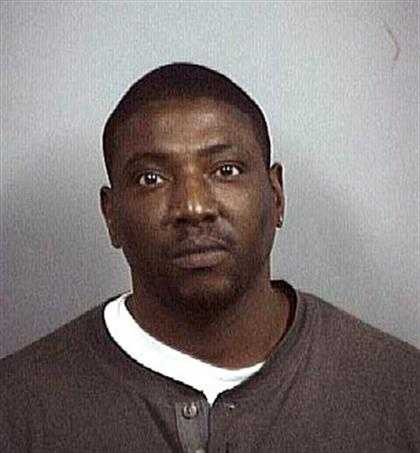
The victim said his face came to her in a dream. That single detail helped send him to prison for 28 years.
Clarence Moses-EL spent 28 years in prison after being convicted of a 1987 rape and assault in Denver, Colorado — a conviction based almost entirely on the victim identifying him after seeing his face "in a dream" while hospitalized. He was exonerated in 2016 and later awarded nearly $2 million in compensation.
An Identification Made in a Dream
In 1987, a woman was severely beaten and sexually assaulted after returning home from a night out. While hospitalized and recovering, she told police that Clarence Moses-EL's face had come to her in a dream, identifying him as her attacker. Moses-EL was convicted in 1988 and sentenced to 48 years in prison, despite no physical evidence directly tying him to the assault beyond the victim's identification and testimony from a neighbor who said the victim had named him the night of the attack.
Destroyed Evidence
Moses-EL maintained his innocence from the start. In 1995, he won a court order allowing DNA testing of physical evidence from the case, funded in part by money raised among fellow inmates. A Denver police detective later said he was never notified of the order, and the evidence was destroyed roughly a month later, before it could be tested — permanently closing off what could have been a straightforward path to clearing his name decades earlier.
A Letter From Another Man
In December 2013, while still in prison, Moses-EL received a letter from L.C. Jackson, a man the victim had originally named as a possible suspect before focusing on Moses-EL. Jackson wrote that he couldn't stay silent any longer about what had happened. At a subsequent court hearing, Jackson testified that he had been with the victim that night, became angry, and struck her in the face — an account that didn't fully align with a rape but directly contradicted the basis of Moses-EL's conviction.
A New Trial and Acquittal
A judge granted Moses-EL a new trial in 2015, citing Jackson's confession, and he was released from prison that December after 28 years. At the 2016 retrial, a jury deliberated for a few hours before finding him not guilty.
A Second Fight, for Compensation
Being acquitted didn't automatically qualify Moses-EL for compensation under Colorado's 2013 exoneration law, which required him to affirmatively prove his innocence, a higher bar than simply winning acquittal. Colorado's attorney general at the time, Cynthia Coffman, opposed his compensation claim for years, citing the original victim's continued belief in his guilt. In February 2019, incoming Attorney General Phil Weiser reversed that position, calling the case "a travesty of justice" and clearing the way for Moses-EL to receive approximately $1.9 million under the law — $70,000 for each year he had wrongfully spent in prison.
Life After Exoneration
Moses-EL, who goes by "Mo," has spoken publicly about his ordeal and worked as a mentor to at-risk youth since his release. He has said he's chosen not to hold onto bitterness, and has expressed hope that the victim in the original case is doing well.
Frequently Asked Questions
How much compensation did Clarence Moses-EL receive?
Approximately $1.9 million, under a Colorado law providing $70,000 for each year of wrongful imprisonment.
Why did it take so long to clear his name?
DNA evidence that could have resolved the case was destroyed by Denver police in 1995, and it took a 2013 confession letter from another man to finally trigger a new trial.
Was anyone else ever charged in the assault?
No. L.C. Jackson testified to being with the victim and striking her that night, but he was never charged, and no one else has ever been convicted in connection with the case.